Namangan State Pedagogical Institute
Source: https://namspi.uz/en/875
How can I contribute to these reforms?
05 October 2026
Today, it is impossible to imagine the development of our country separately from reforms in the fields of education and science. The future of any country is determined, first and foremost, by the kind of generation it raises and the knowledge and skills it provides to its youth.
The Decree of the President of the Republic of Uzbekistan dated October 3, 2026, “On the Establishment of the Ministry of Education and Science of the Republic of Uzbekistan,” has become an important step toward further improving the education system in our country, managing it in accordance with modern requirements, and ensuring continuity among all levels of education.
According to the decree, a unified Ministry of Education and Science is being established on the basis of the Ministry of Preschool and School Education and the Ministry of Higher Education, Science and Innovation.
In my view, this is not simply an organizational change. At its core are such important goals as viewing education as an integrated system, strengthening investment in human capital, and further enhancing the intellectual potential of the country.
As an educator, I consider this reform particularly important in terms of strengthening continuity between different levels of education. After all, the desired results can only be achieved when the initial concepts a child acquires in preschool education are harmonized with the knowledge gained at school, and the knowledge and skills developed at school are integrated with preparation for professional and higher education.
Modern education requires us not only to provide knowledge, but also to nurture individuals who can think independently, strive for innovation, remain competitive, and possess a broad worldview. This, in turn, requires every part of the education system to work in close cooperation with the others.
The broad range of responsibilities assigned to the new ministry — from preschool education and upbringing to general secondary, specialized secondary, vocational, higher, and postgraduate education — represents a practical expression of this integrated approach.
In addition, incorporating retraining and professional development of personnel, as well as additional and non-formal education, into a unified system will help expand opportunities for people to continue learning throughout their lives.
The issue of closely integrating higher education with science is particularly important for us, professors and teachers. A university or institute should not merely be an institution that delivers ready-made knowledge; it should also serve as a center for new ideas, scientific research, and innovative developments.
When a teacher engages in scientific research, students are encouraged to pursue research as well. When the educational process is combined with research, a lesson becomes more than the simple transmission of information — it becomes a creative and scientific environment. In this regard, I believe the new system will create new opportunities for the faster integration of scientific results into the educational process, the support of young researchers, and the further strengthening of the research environment in educational institutions.
Recent years have clearly demonstrated that attention to education in our country is growing more than ever. New schools and educational institutions are being built, their material and technical facilities are being strengthened, and particular attention is being paid to improving the professional capacity of teachers. Access to higher education is expanding, creating new opportunities for young people to gain knowledge and acquire professions.
Most importantly, education is increasingly viewed not simply as the responsibility of one particular sector, but as a key factor in the development of the country.
The establishment of the new ministry will make it possible to continue these reforms based on a common goal and a unified approach.
We, professors and teachers of higher education institutions, are also being entrusted with great responsibility. The expected outcomes of the new reforms will depend primarily on educators’ attitudes toward their profession, their academic and scientific potential, their mastery of modern teaching methods, and the quality of education provided to young people.
Therefore, every teacher should not limit themselves to asking, “What will the new system give me?” but should also ask, “How can I contribute to these reforms?”
After all, the true effectiveness of educational reforms is ultimately reflected in classrooms, in the learning process, in scientific laboratories, and in the knowledge and worldview of pupils and students.
Today, we are standing on the threshold of a new stage in the education system. The main goal of this stage is to raise a generation equipped with modern knowledge, capable of independent thinking, possessing high moral values, and able to compete in a rapidly changing world.
From this perspective, the establishment of the Ministry of Education and Science represents another significant expression of our country’s focus on human capital and an important practical step toward making education and science priority areas of development.
I am confident that as a result of these reforms, cooperation among all levels of education will be further strengthened, while the integration of science and education will be enriched with new content. Most importantly, these changes will contribute to creating a strong intellectual foundation for the future development of our country.
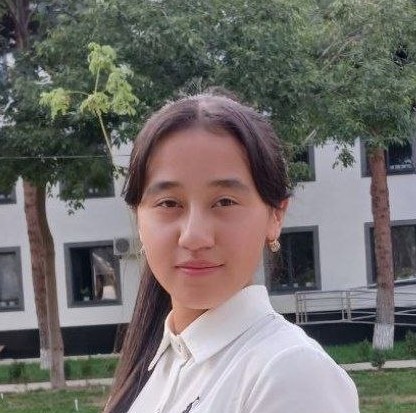
Rayhona TILLAYEVA,
Head of the Department of Philology, NamSPI, Doctor of Pedagogical Sciences, Associate Professor.